Amsterdam makes Space



Citizen Participation for Future Plans
To address this challenge, Amsterdam is turning to its residents for input. Through a combination of public meetings and questionnaires, the municipality is gathering ideas on how to distribute space in Amsterdam by 2050. This participatory approach ensures that future plans reflect the needs and desires of the city’s inhabitants.
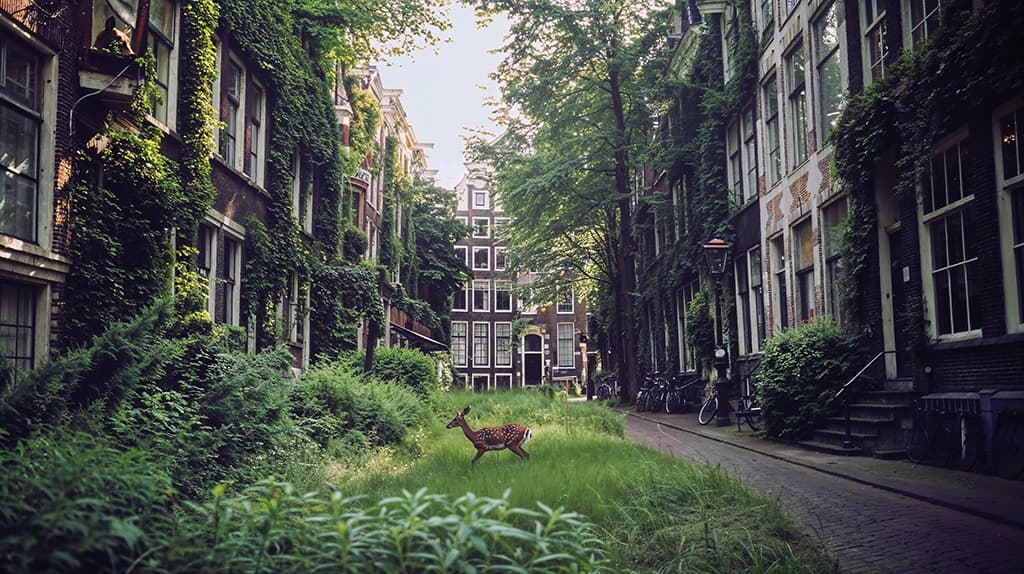
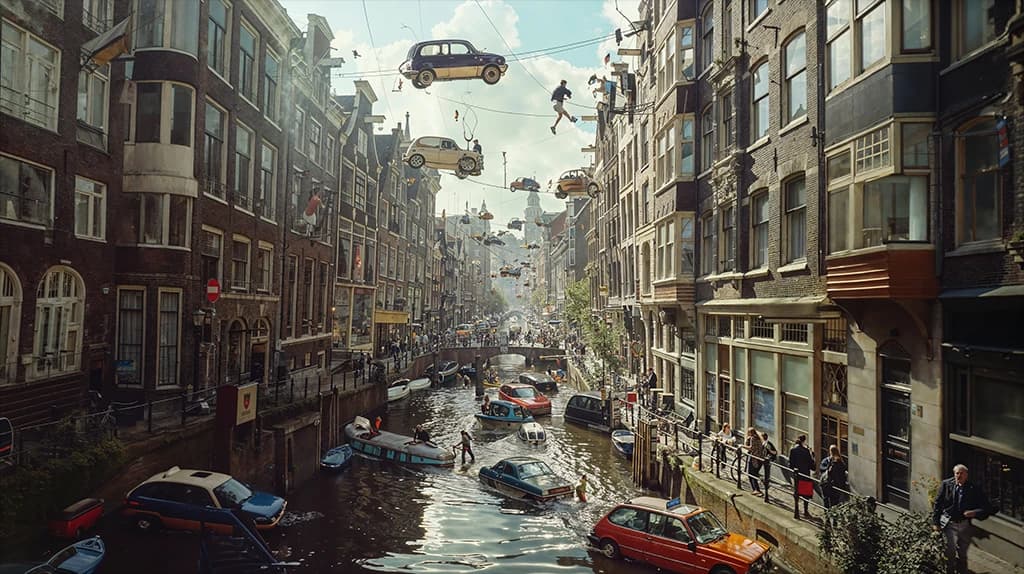
AI Art as a Vision for Amsterdam 2050
My role in this project was to create a utopian vision of Amsterdam in 2050 using AI-generated art. These artworks weren’t meant to be realistic predictions, but rather to spark discussion and imagination. As part of this process, I participated in a breakfast session where I created artworks on the spot, inspired by ongoing discussions. This real-time creation was both exciting and challenging, pushing me to produce high-quality, relevant images in the moment.
Working with AI for Urban Visions
AI technology has revolutionized the speed at which we can create images. However, preparation remains key. I had a set of pre-prepared images ready, which were already on display in an exhibition. This preparedness proved valuable, as working with AI requires a well-thought-out workflow.
The process often involves finding the right approach to generate desired images. Once you’ve established a method, you can create new, relevant artwork by adjusting variables to meet the client’s needs.
Impact and Future
The project culminated in a short presentation of my work. The response was overwhelmingly positive, with all images being reproduced for further use. These AI-generated visions will now serve as discussion pieces for Amsterdam’s municipal staff as they plan the city’s future.
By bridging technology, art, and urban planning, this project demonstrates an innovative approach to envisioning and shaping the future of cities.